
The Cayman Islands real estate market maintained strong momentum throughout the second quarter of 2026, with increases in both transaction activity and sales volume.
While the headline figures point to another exceptional quarter, a closer examination of the data reveals several key factors that influenced the results. From the completion of major new developments to shifts in listing activity, understanding the context behind the numbers provides a clearer picture of the market’s performance and direction.
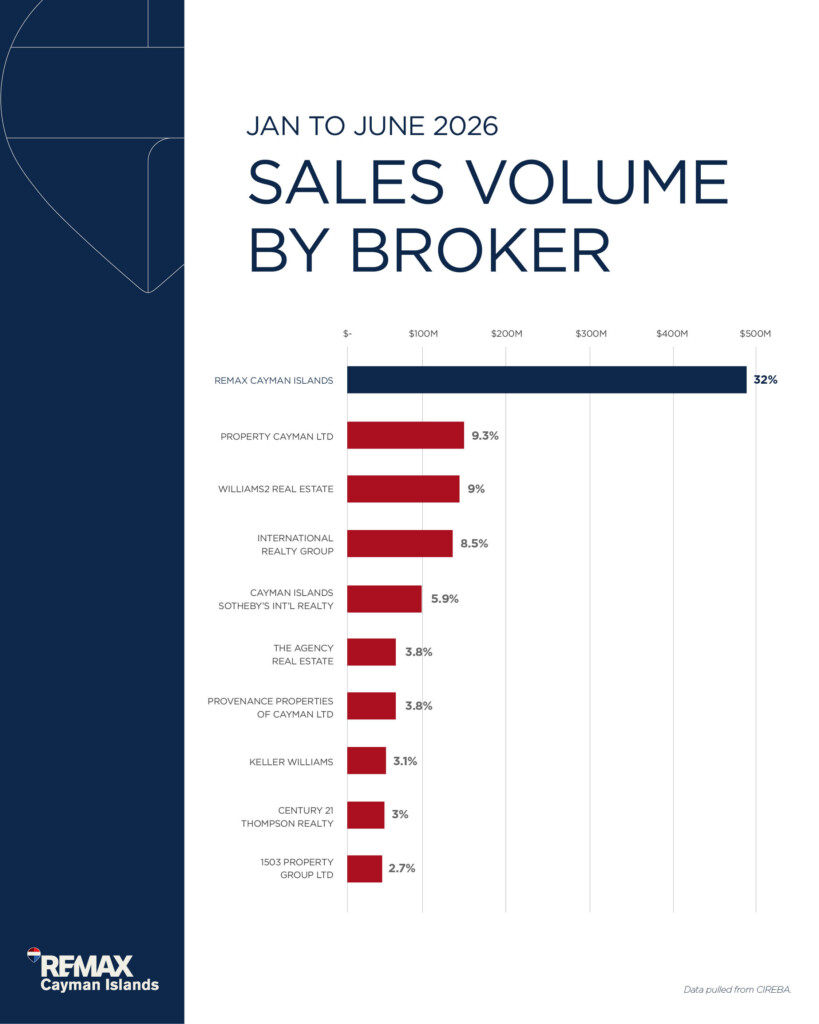
REMAX vs The Industry
When you compare REMAX Cayman Islands to the overall Cayman real estate market, REMAX continues to rank as the #1 real estate company based on sold volume. For the first half of 2026, REMAX had 32% of sales volume compared to a 9.3% market share from our nearest competitors.
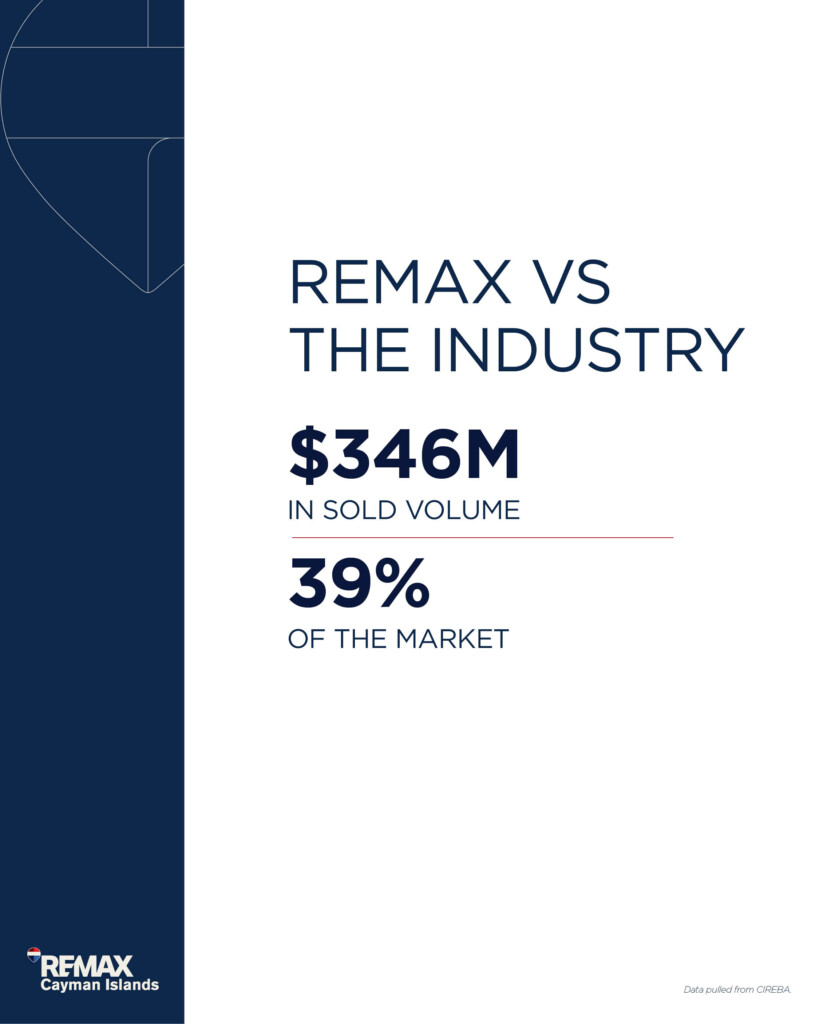
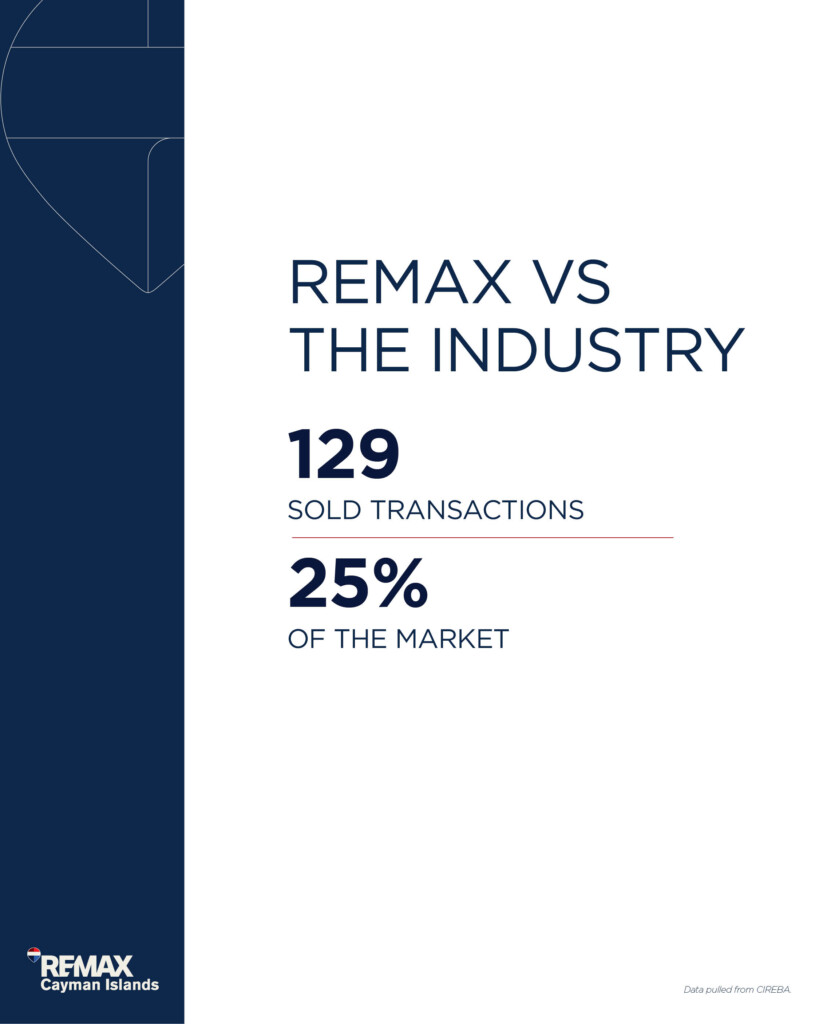
In Q2 2026, REMAX generated $346M in sold volume representing 39% of the market and had 129 sold transactions representing 25% of the overall Cayman real estate market.
Sold Transactions and Sales Volume
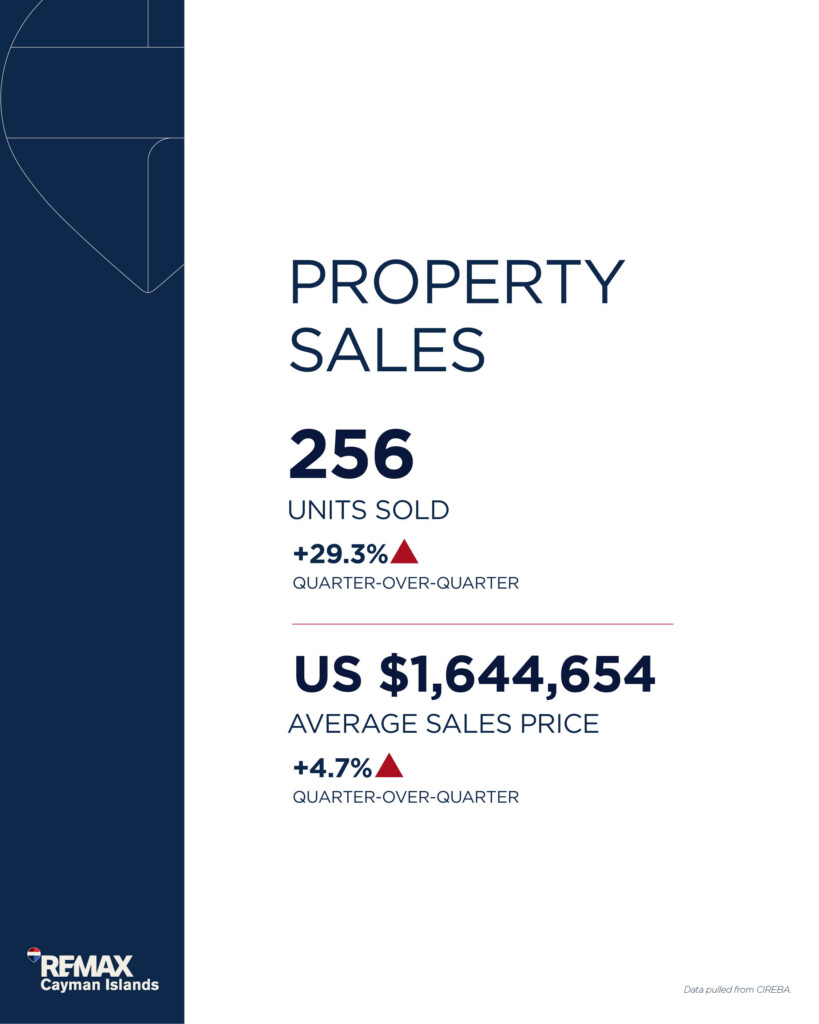
The Cayman Islands real estate market delivered another exceptionally strong quarter in Q2 2026. Total sold transactions increased to 256, representing a 29.3% increase compared to Q1 2026. Sales volume also climbed significantly, reaching US$412.9 million, up 32.7% quarter over quarter.
Average pricing continued its upward trajectory during the second quarter.
The average sale price increased to US$1.644 million, compared with US$1.571 million in Q1 2026, representing a 4.7% increase.
While these headline figures reflect a healthy market, it’s important to understand the factors driving the results. As a relatively small market, Cayman can experience significant statistical shifts when large developments complete and previously contracted pre-sales officially close.
Two developments had a particularly notable impact during the second quarter. The Watermark recorded the closing of 11 residences, representing approximately US$124.2 million in sales, while ONE | GT completed 49 residences with a combined sales value of approximately US$37 million.
Together, these two developments accounted for more than 39% of total sales volume during the quarter, with The Watermark alone representing over 30% of all recorded sales. Their contribution helped push total sales volume for the first half of 2026 beyond US$725 million, establishing a new record for the strongest first six months ever recorded in the Cayman Islands real estate market.
New Listings
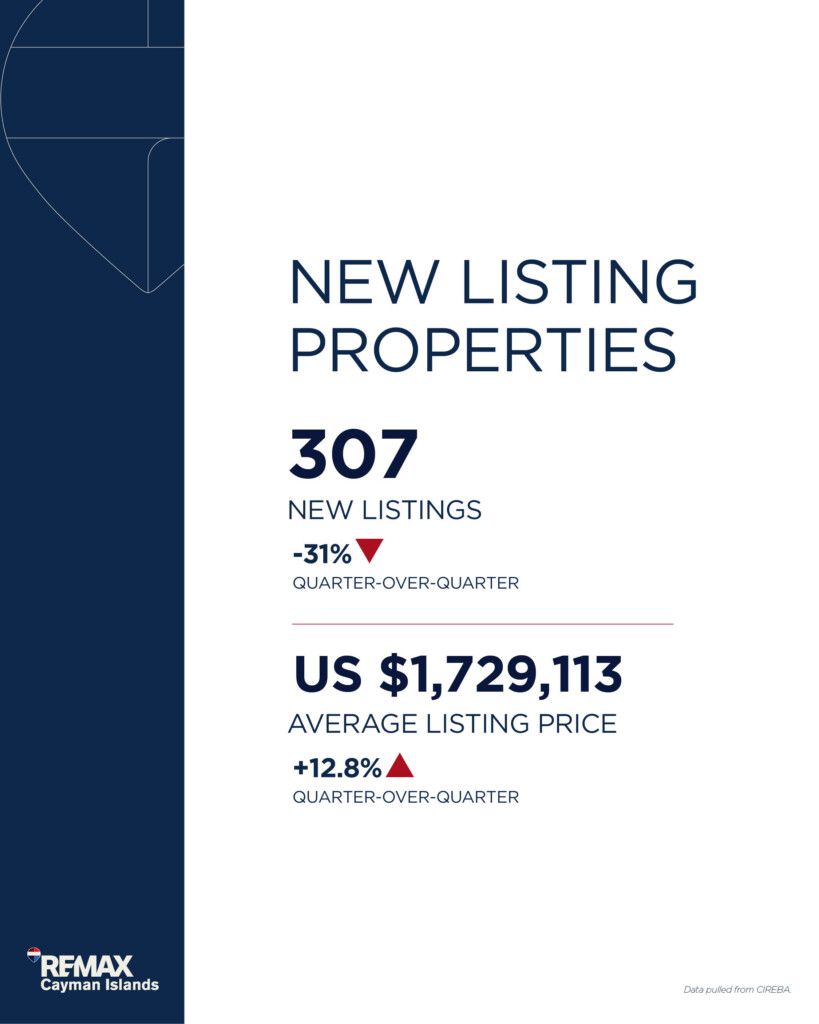
The pace of new listings moderated during Q2, with 307 properties coming to market, a 31% decline from the previous quarter. The total value of new listings also eased to US$536.2 million, down 21% from Q1 2026.
The average asking price for new listings also strengthened, rising from US$1.532 million in the first quarter to US$1.729 million in Q2, an increase of 12.8%.
While these figures may initially suggest a slowdown, they are largely explained by activity earlier in the year. At the end of the first quarter, more than 40 land listings entered the market with an average asking price of approximately CI$150,000. That influx significantly increased listing numbers while simultaneously lowering the average value of new inventory due to the relatively modest price point of those properties.
As a result, the second quarter naturally recorded fewer new listings. However, because a greater proportion of higher-value properties entered the market during Q2, the decline in total listing value was proportionally smaller than the decline in listing count.
This indicates that higher-priced inventory continued to come to market and reinforces the broader trend of increasing property values across many segments of the Cayman Islands real estate market.
Although quarterly market statistics can be influenced by the completion of major developments and changes in listing composition, the underlying trend remains clear. Demand for Cayman Islands real estate continues to support property values, particularly within the premium residential and waterfront sectors, while the market continues to benefit from strong economic fundamentals and sustained investor confidence.
All figures are sourced from CIREBA.